From courts and fields to pools, tracks, mats, and rinks, Stance turns a program's own language into a culture athletes can define, live, and carry forward.
The Origin Story
Built in basketball. Designed for every sport.
I spent five years as an assistant coach at Staples before I took over the program. The community was never the problem; Westport has always shown up for its kids. What we didn't have was an identity. Basketball was one option on a Friday night among a lot of good ones. Nothing made it feel like it was ours.
The summer before I got the job, I sat with my father in Florida. He didn't have much time left. We talked about what I wanted this program to be, and somewhere in that conversation I went back to a basketball clinic I'd been to as a kid. Every time the instructor yelled "STANCE," the whole room yelled "Defense" back and dropped into position, together, on one word. I never forgot how that felt. That summer, it became the name of everything I wanted to build.
STANCE became six letters, three pillars: Craft, how we play; Creed, how we hold each other accountable; Community, who we play for. Playing time got tied to both the Craft and the Creed. Nobody was above either one.
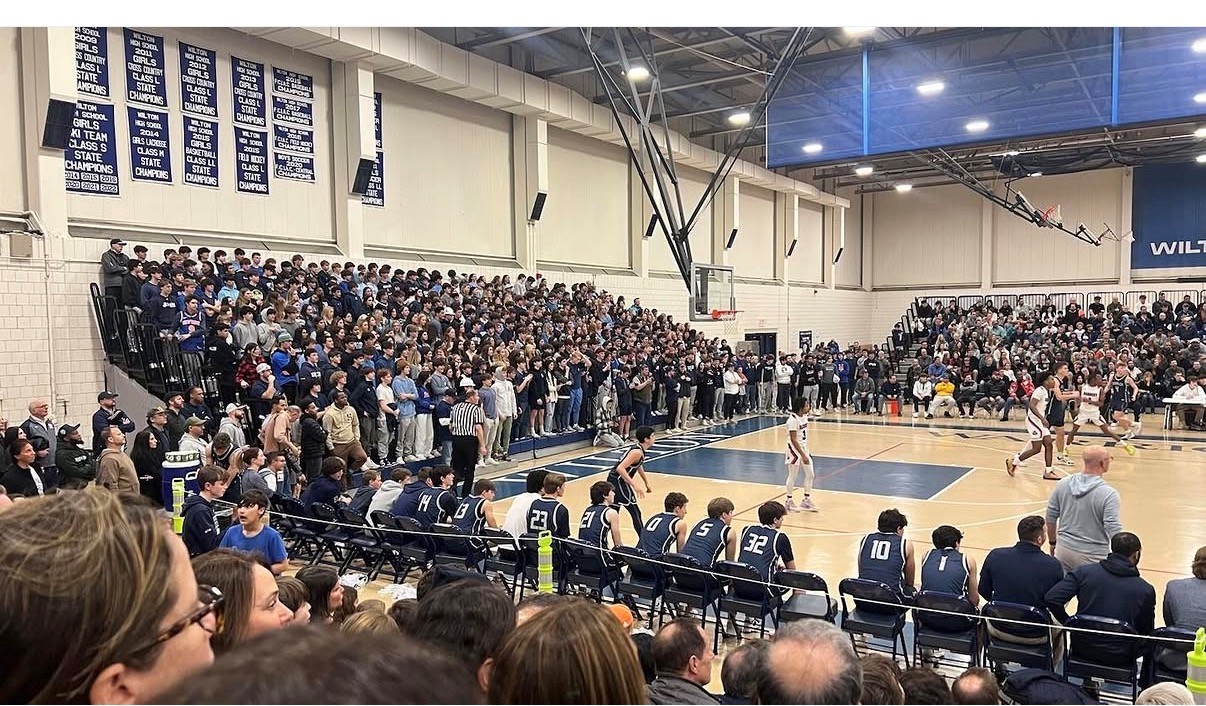
It took time. It always does. But four seasons in, the gym looked different. Alumni started coming back. The student section started running theme nights. The parking lot filled up before tip off, tailgating and all, and none of that happened before I took the job.
We went 85 and 19. Two conference championships. Two trips to the state finals. Winning mattered, and it still does. But what mattered just as much was watching a town stand behind something it had built together.
That's what Stance Sports is. Not a basketball system and not a record. It is a framework built from each program's own language, giving every team a shared standard and every community a reason to show up.
Program culture is visible when the team, staff, and community share the same language.
The Problem
Most programs have a culture. Almost none have it defined.
Every coach knows what they want their program to be. But when the words exist only in the coach's head, they don't govern behavior — they govern intentions. Players interpret. Staff improvise. The culture drifts the moment the coach isn't in the room.
Defined
A word that belongs to this program and no other. Not a tagline. Not a theme. A definition that earns its place.
Lived
The language runs through film, practice, and the locker room. Players use it without prompting.
Owned
Built from your words. Belongs to your program permanently. Goes nowhere when we do.
This is not a poster for your wall. It is the operating language of your program.
Every Competitive Environment
Different sports. Same cultural problem.
A point guard and a goalkeeper do different work. A relay team, wrestling room, rowing shell, and softball dugout use different language. But every program still needs clear standards for craft, accountability, and belonging.
Court
Basketball · Volleyball · Tennis · Racquet Sports
Field
Football · Soccer · Lacrosse · Field Hockey · Rugby
Diamond
Baseball · Softball
Ice & Water
Hockey · Swimming & Diving · Water Polo · Rowing
Track & Endurance
Track & Field · Cross Country · Cycling
Mat & Individual
Wrestling · Gymnastics · Golf · Combat Sports
If athletes train together, compete under one name, and answer to a shared standard, the methodology applies.
The Framework
Three Pillars. Every Program.
Every engagement produces a six-letter word — custom to your program — that operates across three distinct pillars. Explore each pillar below.
C
Pillar One
Craft
Sport System — how you play, named and tracked.
Your technical, tactical, and competitive principles — given specific language that every athlete uses the same way. From training to competition.
→ Shared system vocabulary · Teaching language
C
Pillar Two
Creed
Team Culture — who you are when no one is watching.
The standards and player-led enforcement mechanisms that determine whether your culture lives on a poster or governs actual behavior. Playing time is tied to both Craft and Creed — how you play and how you carry yourself.
→ Leadership council · Daily standards · Accountability · Playing time criteria
C
Pillar Three
Community
Program Identity — what no competitor can replicate.
Your location, your alumni, your conference identity, your history. The identity that keeps athletes invested, brings families into the culture, and gives your community a reason to fill the stands on competition day.
We don't bring a template and fill in your name. The development process starts by listening — to the words you already use in training, competition, team meetings, and recruiting. The framework is built from those words. Every letter earns its place or it doesn't make the cut.
01
Intake
Written questionnaire followed by a 60-minute call. We listen for your language, your principles, and your competitive identity.
02
Research & Development
Independent research on your program, conference, location, and history — combined with your intake language to build the framework draft.
03
Presentation & Approval
Live working session, letter by letter. Nothing is finalized without your explicit approval of every word in every pillar.
04
Pre-Season Installation
Complete delivery package plus staff installation session — before your first practice.
05
Ongoing Support
Every program receives season-long check-ins, mid-season audits, and end-of-year review. The framework doesn't end at installation — it gets deeper every month.
85–19
Four Seasons · Staples Wreckers · FCIAC/CIAC
2×
Conference Champion
2×
State Runner-Up
3×
Coach of the Year
"The record did not produce the framework. The framework produced the record."
— David Goldshore, Founder
The Proof of Concept
Four years. One word. One standard.
The STANCE framework was built, installed, and evolved over four competitive seasons at Staples High School in Westport, CT — one of the most competitive programs in the FCIAC.
Every pillar was tested in real game conditions, real locker rooms, and real conversations with players and families. What held is what Stance Sports delivers to every new program.
Stance Sports was founded to make this methodology available to every program serious enough to build something that lasts beyond a single season.
Who It's For
Every sport. Every competitive setting.
Scholastic Programs
For head coaches who want the foundation in place before day one — and for athletic directors building durable standards across teams.
Public, private, and prep school programs
New coaches building from scratch
Established teams formalizing what already works
College Programs
For teams where recruiting, retention, and daily accountability all depend on a distinct identity athletes can understand and repeat.
JUCO, NAIA, and NCAA programs
Coaches entering a new tenure
Programs differentiating beyond facilities and offers
Club & Community
For travel, academy, and community-based programs that need one standard connecting athletes, coaches, families, and local partners.
Competitive clubs and academies
Multi-team organizations seeking shared language
Programs rooted in a town or regional identity
Two Ways to Fund the Work
Same full framework. Two paths in.
Programs can invest directly through the current engagement model or bring in a sponsor partner to underwrite the work. The methodology, access, and delivery standard stay the same.
01Current Model
Program-Funded
Direct Program Investment
The school, athletic department, booster organization, or club contracts directly with Stance Sports.
Custom engagement pricing
Scope and timing shaped around program level and season
One agreement between Stance Sports and the program
Best for teams with an approved culture or development budget
02Sponsor Model
Partner-Funded
Community Sponsorship
A local business, alumni group, foundation, or community partner underwrites the engagement for the program.
$0 to the program when fully sponsored
Stance can help shape the sponsor story and funding package
Sponsor recognition stays tasteful and community-centered
No access to athlete data and no influence over team decisions
Founding programs receive the complete engagement through either funding path. Nothing is held back for later, and nothing gets upsold along the way.
Add-On Service
Work smarter. RightClick AI.
Pair your cultural framework with AI strategy and automation. RightClick AI helps programs identify where artificial intelligence can deliver real impact — improving workflows, enhancing recruiting communication, and giving your staff more time to coach.
The discovery call is 45 minutes. No commitment. You'll leave with a clear picture of what a framework would look like for your program.
The Methodology
How a framework gets built.
Seven phases. Proven over four years. Every engagement follows the same sequence — because the quality of the framework depends on it.
The Development Sequence
Intake to installation.
01
Phase
6–8 Weeks Before Season
Intake
A written questionnaire completed by the head coach before the call surfaces your raw material — the words you use in film, in huddles, in conversations. The 60-minute call goes deeper. We are listening for vocabulary, not philosophy statements.
02
Phase
4–5 Weeks Before Season
Research
Independent research on your program, conference, city or campus, and competitive landscape — combined with intake language to develop perspective the framework is built from. This is what makes the framework more than a repackaging of what you already said.
03
Phase
3–4 Weeks Before Season
Framework Development
Word selection, letter mapping across all three pillars, language drafting, internal review. Every letter must carry genuine weight — if a letter can only produce two viable words, the word changes. The framework earns its letters or it does not advance.
04
Phase
2–3 Weeks Before Season
Presentation
A 60–90 minute live session with the head coach. Framework walkthrough, letter by letter, pillar by pillar. This is a working session — the coach pushes back. Every element is revised until it earns coach approval.
05
Phase
1–2 Weeks Before Season
Delivery Package
Framework Overview Document, Player Quick-Reference, Pillar Guides, and Implementation Roadmap — the full package. Comprehensible to a new assistant coach without any additional explanation.
06
Phase
First Week of Practice
Installation
In-person or virtual session with the full coaching staff. Framework orientation, film integration planning, and role assignments. Followed by the player introduction. By the end of week one, the language is in the building.
07
Phase
Every Program, All Season
Ongoing Engagement
Quarterly check-in calls, mid-season audit, and end-of-year review. Framework drift — when the language exists on paper but is no longer being used consistently — is the primary risk. These touchpoints are designed to catch it early.
Ready to see what your program's framework looks like?
The discovery call is 45 minutes. No commitment required.
Case Study
Staples Wreckers Basketball.
Two conference championships. Two state runner-up finishes. Three Coach of the Year awards. An 85–19 record over four seasons in the FCIAC.
2×
Conference Champion
2×
State Runner-Up
3×
Coach of the Year
85–19
Record · 4 Seasons · FCIAC
The Context
Staples High School in Westport, CT competes in the FCIAC — one of the most competitive high school athletic conferences in New England. When David Goldshore took over the basketball program, he didn't need a new system. He needed shared language for the system he already had.
The STANCE framework was built from the ground up over the first season and refined across three more. Every word came from Goldshore's own coaching vocabulary. The framework didn't describe the program — it became the program's operating language. For a public school program, the Community pillar wasn't about recruiting. It was about identity — what it means to wear this uniform in this town.
"The record did not produce the framework. The framework produced the record."
What Held
The Craft pillar gave players the language to self-evaluate in film without prompting from staff. The Creed pillar created player-led accountability that functioned independently of coaches. The Community pillar gave players and families a shared sense of identity — what it means to be a Wrecker, to represent Westport, and to carry something that belongs to this community.
Across four seasons the framework didn't need to be replaced — it needed to be deepened. That's the durability standard every Stance Sports engagement is built to meet.
Ready to build your framework?
45 minutes. No commitment. Let's see what your program's word looks like.
About
The framework came first.
Stance Sports was not built in a consulting office. It was proven inside one basketball program, then shaped into a sport-agnostic methodology for teams competing on courts, fields, tracks, mats, in pools, and on ice.
85–19
4 Seasons · Staples Wreckers
2×
Conference Champion
3×
Coach of the Year
1
Methodology. No exceptions.
David Goldshore
David Goldshore is the founder of Stance Sports and creator of the Three-Pillar Framework methodology. Before founding Stance Sports, he served as Head Basketball Coach at Staples High School in Westport, CT, where he built and deployed the STANCE framework over four years — producing an 85–19 record, two conference championships, and three Coach of the Year awards. Basketball was the proving ground; the methodology was built to serve every sport.
"The record did not produce the framework. The framework produced the record."
The STANCE framework was not designed as a consulting product. It was designed as a coaching tool — built out of necessity to give a staff and a roster a shared language for the things that actually determined outcomes.
Why Stance Sports
Every program has a culture. Most programs have never written it down. The gap between what a coach believes and what a player understands is usually not a failure of intent — it is a failure of language. Stance Sports closes that gap before the season starts.
The methodology is sport and gender agnostic. What changes is the language. The structure does not.
Your program has a culture. It deserves a name.
45 minutes. No commitment.
Questions
Frequently Asked.
If you're wondering whether this is the right fit for your program, these are the questions most coaches ask before a discovery call.
A speaker gives your team something to think about for a day. A workshop produces a document. Stance Sports produces a custom language system — built from your vocabulary — that your staff uses in film, your players use in the locker room, and families hear at the start of the season. The framework is installed before your first practice and designed to be used every day.
Before any call, the head coach completes a written questionnaire covering program history, system vocabulary, cultural priorities, and community context. The 60-minute intake call goes deeper on those answers — specifically listening for the words you already use. The questionnaire is sent only after the partnership is confirmed.
The full development sequence — intake through delivery package — runs six to eight weeks before the program's first official practice. The timeline is not flexible: a framework introduced mid-season competes with an established culture. A framework installed six to eight weeks out has time to become the culture.
Yes. The three-pillar structure — Craft, Creed, Community — maps to any competitive athletic program regardless of sport or gender. Basketball was the original proof of concept, but the methodology applies to football, lacrosse, soccer, baseball, softball, volleyball, hockey, wrestling, tennis, golf, swimming, track and field, and beyond. The language changes for each program. The structure does not.
The presentation session is a working session, not a reveal. The coach pushes back. Language is revised in real time. Nothing is finalized without explicit coach approval of every word in every pillar.
Yes. Public school engagements focus on player retention, community pride, competitive identity, and a standard families can understand. A school can fund the engagement directly or use the sponsor model when athletic department funding is limited.
Under the current program-funded model, the school, athletic department, booster organization, or club pays for a custom engagement. Under the sponsor-funded model, an approved business, alumni group, foundation, or community partner underwrites the same work. When sponsorship covers the full engagement, the program pays nothing. The scope and delivery standard do not change based on who funds it.
Sponsors receive a clear community-impact story and tasteful recognition connected to their support of local athletes and program development. Sponsorship never includes athlete data, recruiting access, influence over roster or coaching decisions, or ownership of the program's framework.
The Founding Program Pilot carries the full standard, complete framework development, pre-season installation, season-long check-ins, mid-season audit, and end-of-year review with a Year 2 brief, for one of the first towns to bring STANCE in. It is not a reduced-scope engagement. Availability is limited.
RightClick AI is a separate paid service, not included in the standard Stance Sports engagement under either funding model. It pairs cultural framework development with AI workflow automation, recruiting communication, staff efficiency, and program operations, and is scoped and priced independently. Visit www.therightclick.com.
Still have questions? Let's talk.
The discovery call is the fastest way to get a direct answer for your specific situation.
Insights
On Culture, Language & Winning.
Thinking from Stance Sports on what separates programs that build something lasting from those that restart every season.
From the Founder
The work behind the work.
W
Framework · Culture
How a Framework Gets Off the Wall and Into the Locker Room
Every program has a poster. Few have a culture. The difference isn't the words — it's whether anyone is living them.
David Goldshore · Stance Sports
L
Leadership · Accountability
The Best Teams Police Themselves
The programs that sustain success don't rely on coaches to enforce every standard. They build players who do it for them.
David Goldshore · Stance Sports
D
Operations · Drift
Framework Drift: What It Is and How to Stop It
The framework exists on paper. By January, something changed. This is framework drift — and it's preventable.
David Goldshore · Stance Sports
Coming Soon
More insights are in development.
If you want to be notified when new pieces are published, include your email on the contact form.
Framework · Culture
How a Framework Gets Off the Wall and Into the Locker Room.
Every program has a poster. A set of values printed in the team colors, laminated, mounted on the wall outside the film room. Most coaches can tell you what's on it. Most players stopped reading it by November.
The poster isn't the problem. The problem is that the poster is where the culture lives. And a culture that lives on a wall doesn't govern behavior, it decorates it.
The Question Coaches Don't Ask
When a program installs a cultural framework, the question that gets asked is: does this reflect who we are? That's the right question during development. But it's the wrong question on day one of practice.
The question that matters is: how does this get off the wall?
The answer has nothing to do with how good the words are. It has everything to do with whether the people in the building, players, staff, families, have a specific, daily way to use them. Language that isn't used daily isn't culture. It's decoration.
What "Living in the Building" Actually Means
A framework is live when a player in film session can point to a specific principle by name and explain why a possession succeeded or failed without the coach prompting them. That's the Craft pillar working.
A framework is live when a player pulls another player aside after practice, not the coach, the player, and holds them to a standard they both agreed to. That's the Creed pillar working.
A framework is live when a parent in the stands knows what the team is trying to build and why, because the program gave them language too. That's the Community pillar working.
None of that happens because the words are good. It happens because the installation was built for the people who have to use them, not the people who built them.
The Installation Is the Work
The development process, intake, research, framework build, presentation, produces a document. The installation session produces a culture. Those are not the same thing, and confusing them is how frameworks end up on walls.
At Staples, the framework wasn't handed to players as a finished product. It was introduced with context, connected to things they'd already experienced, and immediately put to use in film the following day. By the end of the first week, players were using the language with each other without being prompted. By the first game, it was the operating vocabulary of the program.
That sequence, introduction, connection, immediate use, is what every Stance Sports installation is built around. The words don't matter if no one is saying them. The framework doesn't matter if it stays on the wall.
Think about the best team you were ever part of, as a player, a coach, or an observer. The thing that made it different from every other team wasn't the system. It wasn't the talent. It was that the players held each other to a standard the coaches didn't have to enforce.
That's not a coincidence. It's a structure. And it can be built.
What Player-Led Accountability Actually Looks Like
Player-led accountability is not a motivational concept. It is a specific mechanism: players know the standard, they've agreed to it, they have language to name violations of it, and they have a defined process for addressing those violations without going to a coach first.
Most programs have the first two. Almost none have the last two. And without shared language and a defined process, accountability stays with the coaching staff, which means it's always one resignation, one reassignment, or one bad hire away from disappearing entirely.
Why Shared Language Is the Foundation
You cannot hold someone accountable to a standard they can't name. This sounds obvious. It isn't practiced.
When a player violates a cultural standard in a program without shared language, the conversation that follows is imprecise. "That wasn't who we are." "That's not the standard." "Come on." Those phrases mean something to the coach who said them. They mean something different, or nothing, to the player who heard them.
When a player violates a standard in a program with shared language, the conversation is specific. The standard has a name. The violation is identifiable. The correction is actionable. And critically, any player in the program can have that conversation, not just the coaches.
The Schedule Burden Is Real, and It's the Wrong Frame
The most common objection to a cultural framework from players isn't resistance to accountability. It's capacity. Athletes are already stretched. Film, practice, weights, class, travel. If the framework feels like one more thing added to the load, it gets tuned out within two weeks.
The reframe: the framework doesn't add to the load. It reduces it. Shared language makes film faster. Corrections are cleaner because the vocabulary already exists. Expectations are clearer because they were agreed to before the season started, not enforced after a problem surfaced.
The best teams don't police themselves because they have more time. They police themselves because the standard is clear enough that doing so takes less effort than the alternative.
The framework exists on paper. The coach knows the words. The players knew them in September. It's January, and something changed.
No one decided to stop using the framework. No one announced that the culture was shifting. It happened the way most institutional drift happens, gradually, then all at once. This is framework drift, and it is the primary risk of any cultural framework engagement.
How Drift Happens
Drift doesn't start with a bad loss or a problem player. It starts with a busy week. A film session where the language gets skipped because there's more tape to cover. A practice where the coach corrects behavior without using the framework vocabulary because it's faster. A player meeting that focuses on Xs and Os and skips the Creed check-in because the game is in two days.
Each of those is a reasonable decision in isolation. The accumulation is drift. By the time anyone notices, the framework is a document, not a culture.
The Early Warning Signs
Drift is detectable before it becomes a problem if you know what to look for. The first sign is always language. When players stop using the framework vocabulary without being prompted, when it stops showing up in how they talk about practice, about film, about each other, the framework is drifting.
The second sign is staff inconsistency. When one assistant is using the framework in film and another isn't, the language fractures. Players learn quickly which standards are being enforced and which are optional. Optional standards aren't standards.
How to Stop It
The answer is not a recommitment speech. It is not a new poster. It is a structured mid-season audit, a specific review of how the language is being used, where it has drifted, and what the correction looks like at the practice level, not the philosophy level.
This is why every Stance Sports engagement includes a mid-season audit as a deliverable, not an optional add-on. Drift is predictable. It is also preventable, but only if the mechanism for catching it is built into the engagement before the season starts, not retrofitted after January.
A framework that lasts four seasons, the way STANCE did at Staples, doesn't last because the words were good. It lasts because drift was caught early, every year, and corrected before it became culture.
Let's Talk
Book a Discovery Call.
45 minutes. We'll talk about your sport, your culture, what a framework would look like, and whether direct pricing or sponsorship is the better path. No pitch. No commitment required.
Contact
Reach David directly.
Founder
David Goldshore
Website
stancesportsai.com
What to Expect
A 45-minute call covering your sport, competitive context, current culture, and the right funding path. Coaches, athletic directors, booster leaders, and potential sponsors are all welcome to start the conversation.